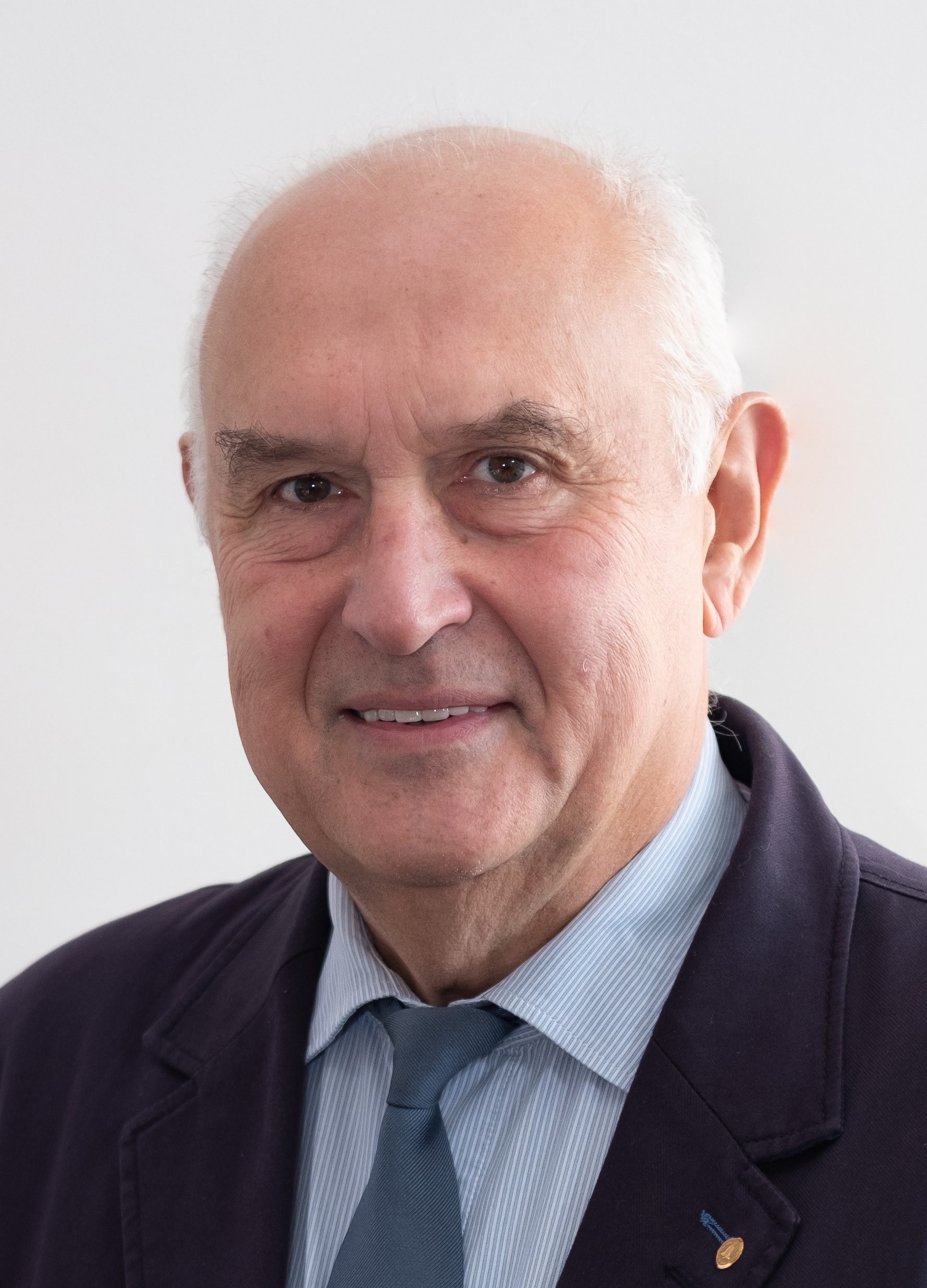
Prof. Gintautas Dzemyda
Talk Title
AI-driven practical applications: medicine, finance, and psychology
Abstract
Artificial intelligence is finding a wide range of new applications and also offers opportunities to discover new, more effective solutions to existing problems. Several AI-driven applications in medicine, finance, and psychology are discussed: surgical planning, fraudulent transaction detection, and emotion recognition from images.
We focus on liver transplantation, credit card fraud, and emotions in images of a general nature. Each of these three tasks is highly specific, but they all involve classification. For the transplantation task, the question is whether the patient will survive; for the financial task, whether the transaction is fraudulent; and for the image analysis task, what emotion the selected image conveys. We discuss the methods used to solve the problem, the data used to train the classifier, and present the results.
Biography
Gintautas Dzemyda received the Doctoral (Ph.D.) degree in technical sciences and the Doctor Habilis degree from Kaunas University of Technology in 1984 and 1997, respectively. He was conferred the title of Professor at Kaunas University of Technology (1998) and Vilnius University (2018). Currently, he is a Professor, a Principal Researcher, and the Head of the Cognitive Computing Group of the Institute of Data Science and Digital Technologies, Faculty of Mathematics and Informatics, Vilnius University.
Chief of the Division of Technical Sciences of the Lithuanian Academy of Sciences. He has extensive experience in research at the intersection of computer science and artificial intelligence with other urgent disciplines, including medicine, economics, and technology. He is the author of more than 300 scientific publications, two monographs, and 17 edited books. His research interests include artificial intelligence, data mining, multidimensional data visualization, optimization theory and applications, neural networks, and image analysis.
He has been a Full Member of the Lithuanian Academy of Sciences since 2011. He was awarded the Lithuanian Science Prize twice, in 2001 and 2021. Doctor Honoris Causa of the University of Latvia (2019) and Vilnius College (2025). He is the Editor-in-Chief of two international journals, Informatica and Baltic Journal of Modern Computing.